Clingy Meaning in Relationship: 7 Real Signs You Shouldn’t Ignore
It started with something small.
Mason noticed Zoe checking her phone again and again. He had just stepped out for a couple of hours, but when he came back, there were multiple missed calls and messages like, “Where are you?” and “Why aren’t you replying?”
At first, it felt like care. Then slowly, it started feeling like pressure.
If you’ve ever been in a situation like this, you’ve probably wondered about the clingy meaning in relationship and whether it’s something to worry about.
Let’s talk about it in a simple, real way.
Clingy Meaning in Relationship (In Real Life Terms)
Instead of giving you a textbook definition, think of it like this:
Clingy behavior is when love starts feeling like control.
It’s when someone depends too much on their partner for emotional comfort, attention, or reassurance. And when that doesn’t come instantly, anxiety kicks in.
It doesn’t always look obvious. Sometimes it hides behind care.
Like: “Did you eat?” “Where are you?” “Why didn’t you reply?”
These questions are normal. But when they come with fear, pressure, or constant need, that’s where the clingy meaning in relationship becomes important to understand.
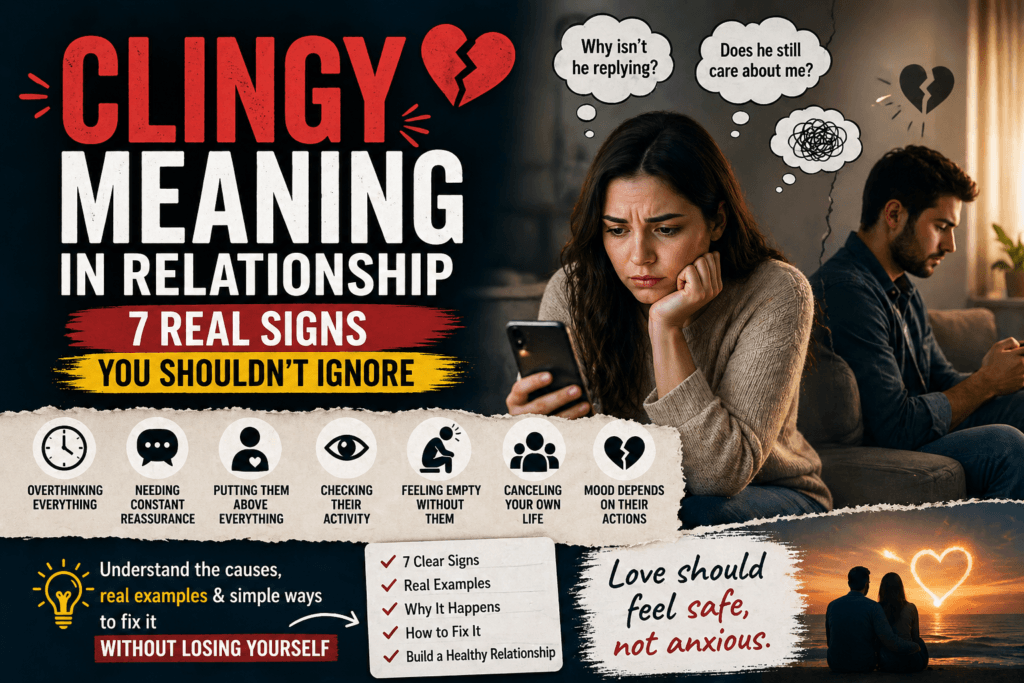
7 Real Signs That Show Clingy Behavior
1. Small Delays Feel Like Big Problems
Zoe gets anxious if Mason doesn’t reply within minutes.
Instead of thinking he’s busy, her mind jumps to worst-case scenarios.
2. You Need Constant Reassurance
You keep asking: “Do you still care about me?” “Are we okay?”
Once in a while is fine. But if it becomes a habit, it shows dependency.
3. You Overanalyze Everything
A short reply feels like something is wrong.
A late call feels like distance.
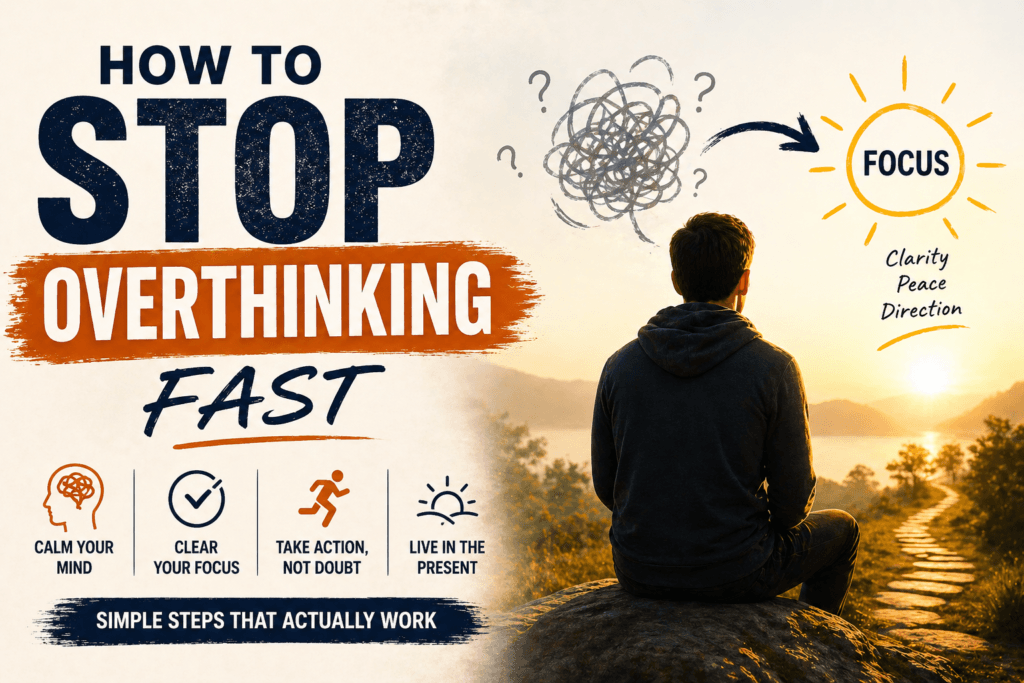
If this sounds familiar, you might want to explore this deeper
4. Your Mood Depends on Them
If they’re happy, you’re happy.
If they’re distant, your whole day feels off.
5. You Cancel Your Own Life
Plans with friends? Cancelled.
Personal goals? Ignored.
Everything starts revolving around one person.
6. You Keep Checking Their Activity
Last seen, online status, social media updates.
You don’t even realize how often you’re doing it.
You Feel Incomplete Without Them
It feels like your happiness only exists when they’re around.
That’s not love. That’s emotional dependence.
Why Do People Become Clingy?
This is where things get deeper.
Clingy behavior isn’t random. It usually comes from something inside.
1. Fear of Losing Someone
Zoe wasn’t trying to control Mason. She was just scared of losing him.
Sometimes, fear shows up as attachment.
2. Low Self-Worth
When you don’t feel enough on your own, you look for constant validation from your partner.
3. Past Hurt
If you’ve been ignored, cheated on, or left before, your mind stays alert.
It tries to “protect” you, but ends up creating stress.
4. Overthinking Habit
Clinginess and overthinking often go together.
If your mind keeps creating stories, it’s easy to feel insecure.
You can understand this better here
5. Lack of Personal Space
When your life has no balance, one person becomes everything.
And that’s where problems begin.
How to Deal with Clingy Behavior Without Breaking the Relationship
You don’t need to become a different person.
You just need balance.
1. Build Your Own Routine
Have your own goals, hobbies, and daily structure.
Your life should not depend on one person.
2. Pause Before Reacting
Not every delay means something is wrong.
Give your mind a moment before jumping to conclusions.
3. Talk Honestly, Not Emotionally
Instead of accusing, say: “I feel a bit anxious when I don’t hear from you.”
This creates understanding, not conflict.
4. Respect Space
Space doesn’t mean losing someone.
It means trusting them enough to let them breathe.
5. Work on Self-Value
Remind yourself: You are enough, even without constant reassurance.
6. Set Emotional Limits
Don’t let your mood fully depend on another person’s actions.
A Short Story That Makes It Clear
Let’s go back to Mason and Zoe.
Earlier: Mason replies late → Zoe overthinks → calls repeatedly → Mason feels pressured
Now imagine this:
Mason replies late → Zoe understands he’s busy → focuses on her own work → sends one calm message
- Same situation.
- Different response.
- Different outcome.
Quick Recap
Clingy meaning in relationship is not about love. It’s about emotional dependence.
Love feels calm
Clinginess feels anxious
Love gives space
Clinginess creates pressure
Balance is the key.
Final Thoughts
If you see yourself in this, don’t stress.
This is more common than you think.
Clingy behavior can change with small steps. Start by focusing on your own life. Build confidence. Trust a little more.
And most importantly, don’t try to control everything.
If you want to understand your thoughts better and feel more emotionally stable, you can start here
Take it slow.
You don’t need to be perfect.
You just need to feel secure — with or without someone.
If you want to contact or ask anything, you can reach here
For trusted mental health information,
About the Author

Hashim Shah is the founder of KT Hope —
an AI tools expert, content writer, and digital marketer. He shares practical, research-driven content on AI tools, SEO, blogging, and online business growth to help readers work smarter and succeed online.