7 Powerful Ways on How to Deal with Ghosting in a Relationship Without Losing Yourself
Introduction
You wake up, check your phone… and nothing.
No message. No reply. No explanation.
Yesterday everything felt normal. Conversations were flowing, maybe even getting deeper. And today… silence.
At first, you try to stay calm.
“Maybe they’re busy.”
“Maybe something came up.”
But as hours turn into days, one thought starts getting louder:
At this point, understanding how to deal with ghosting in a relationship becomes essential for your emotional clarity.
“Did they just disappear… on purpose?”
If you’re here searching for how to deal with ghosting in a relationship, you’re not alone. And more importantly, you’re not weak for feeling hurt.
Understanding how to deal with ghosting in a relationship can save you from emotional confusion and unnecessary pain.
Let’s break this down honestly.
What Is Ghosting in a Relationship?
Ghosting meaning is simple, but painful.
It’s when someone suddenly cuts off all communication without any explanation. No calls. No texts. No closure.
One day they’re there. The next day, it’s like they never existed.
In a relationship, ghosting can feel even worse because you’ve already invested emotions, time, and trust.
It leaves you confused, questioning everything:
“Was it real?”
“Did I do something wrong?”
But here’s the truth — ghosting says more about them than it does about you.
That’s why learning how to deal with ghosting in a relationship starts with understanding its true meaning.
Signs of Ghosting in a Relationship
Sometimes ghosting doesn’t happen instantly. It builds up.
Here are common signs of ghosting:
- Replies become slow and dry
- Conversations feel forced
- They stop initiating contact
- Calls go unanswered
- Excuses become frequent
- Suddenly, complete silence
At first, you might ignore these signs. You might even blame yourself.
But recognizing these early helps you protect your emotional energy.
These early patterns also help you understand how to deal with ghosting in a relationship before it gets worse.
Why Do People Ghost?
This is the question that hurts the most.
“Why would someone just disappear like that?”
Here are some real reasons:
- They lack emotional maturity
- They don’t know how to communicate honestly
- They lost interest but avoided confrontation
- They were never serious
- They fear conflict or accountability
Some people ghost because it’s easier than explaining.
Not right. But easier.
And sometimes, people confuse attention with connection. Once the excitement fades, they leave.
Understanding this makes it easier to learn how to deal with ghosting in a relationship without blaming yourself.
Emotional Impact of Ghosting
Ghosting doesn’t just hurt. It messes with your mind.
You may feel:
Rejected
Confused
Angry
Anxious
Insecure
You start overthinking everything.
“What did I say wrong?”
“Was I too much?”
If this sounds like you, you might benefit from understanding
how to stop overthinking fast
Ghosting creates unanswered questions — and your brain hates unanswered questions.
That’s why it keeps replaying everything.
How to Deal with Ghosting in a Relationship
This is the most important part.
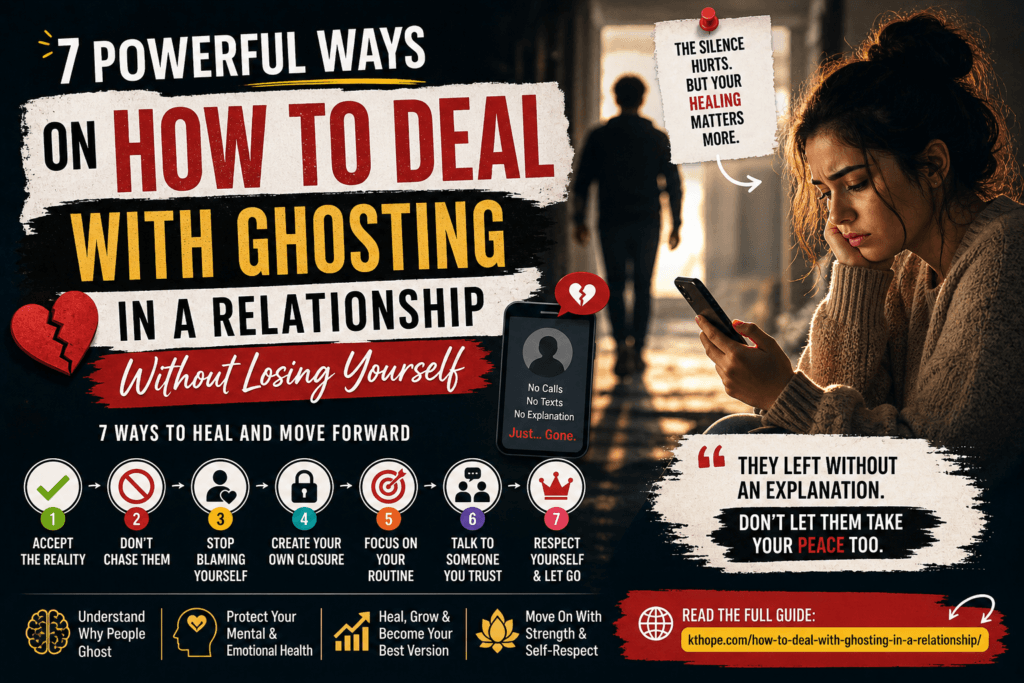
1. Accept the Reality
It’s hard, but necessary.
If someone hasn’t replied for days with no explanation — that’s your answer.
Silence is also communication.
Don’t keep waiting for closure from someone who chose to disappear.
2. Don’t Chase Them
Your first instinct might be to text again.
“Hey, are you okay?”
“Did I do something wrong?”
But chasing won’t bring respect.
If someone wants to talk to you, they will.
3. Stop Blaming Yourself
You’ll want to find a reason.
Maybe you think you were too emotional or too attached.
Understanding concepts like
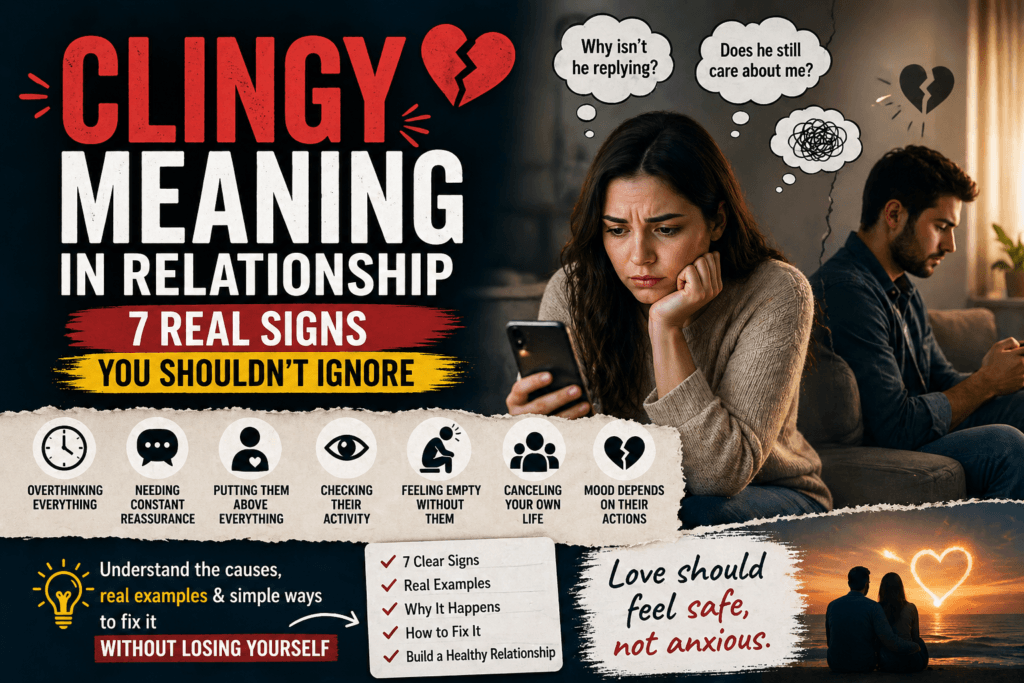
clingy meaning in a relationship
can help you reflect — but don’t jump to conclusions.
Sometimes, the problem isn’t you.
4. Create Your Own Closure
You may never get an explanation.
So give yourself one:
“They were not emotionally available.”
“They chose to leave instead of communicate.”
Closure is something you create, not something you wait for.
5. Focus on Your Routine
The more idle you are, the more your mind overthinks.
Stay busy.
Work. Learn. Improve.
Even exploring something new like
small business idea in India with low investment)
can shift your focus and energy.
6. Talk to Someone You Trust
Don’t bottle it up.
Talk to a friend. A sibling.
Sometimes, just saying it out loud reduces the weight.
7. Respect Yourself Enough to Let Go
This is the hardest part.
But also the most powerful.
If someone can disappear without explanation, they don’t deserve your emotional space.
How to Move On from Ghosting
Moving on doesn’t happen overnight.
But it does happen.
Accept that not all stories get closure
Stop checking their last seen or social media
Remove triggers (photos, chats)
Focus on your growth
Give yourself time
According to research in interpersonal psychology, unresolved endings often cause emotional stress — but self-closure reduces long-term impact.
You don’t need their reply to heal.
How to Avoid Being Ghosted
You can’t fully control it, but you can reduce the chances:
- Notice early red flags
- Don’t ignore inconsistent behavior
- Communicate openly
- Don’t invest too fast
- Choose emotionally mature people
Healthy relationships don’t disappear suddenly.
Real-Life Example
Mason met Zoe online.
They talked daily. Everything felt right.
Then suddenly, Zoe stopped replying.
Mason waited. Texted again. Got no response.
For weeks, he kept checking his phone.
One day, he stopped.
He accepted it.
He focused on himself.
Months later, he realized — it wasn’t rejection. It was redirection.
Common Mistakes
- Waiting too long for a reply
- Overthinking every detail
- Blaming yourself completely
- Trying to “fix” the situation
- Stalking their social media
These only delay your healing.
FAQs
- Is ghosting a form of disrespect?
Yes. It shows lack of communication and emotional responsibility.
2. Should I message again after being ghosted?
One follow-up is okay. Repeated messages are not.
3. Does ghosting mean they never cared?
Not always, but it means they didn’t care enough to communicate.
4. Why does ghosting hurt so much?
Because it leaves you without closure.
5. Can a ghoster come back?
Sometimes. But ask yourself — do you want someone who disappeared once?
Conclusion
Ghosting hurts.
Not because you’re weak. But because you cared.
But here’s the truth:
Someone leaving without explanation is not your failure.
It’s their inability.
You deserve clarity. Respect. Effort.
Not silence.
CTA
If you’ve ever been ghosted, don’t let it define your worth.
Take this as a lesson, not a loss.
And if this helped you, explore more guides on relationships and growth on your site.
About the Author

Hashim Shah is the founder of KT Hope —
an AI tools expert, content writer, and digital marketer. He shares practical, research-driven content on AI tools, SEO, blogging, and online business growth to help readers work smarter and succeed online.